

Reinventing Pest Control, One Metric at a Time With Carmen Reino
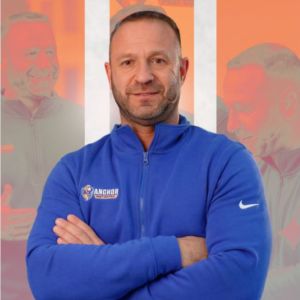
Carmen Reino is the President and Owner of Anchor Pest Control, a residential and commercial pest management company serving New Jersey and Pennsylvania. After leaving Wall Street IT, he bought a one-person business in 2005 and expanded it to four locations, with revenue projected to approach $12 million in 2026. Carmen leads its data-driven marketing, customer experience, and operational strategy, using rigorous measurement, continual testing, and AI-powered tools to drive growth. Under his leadership, Anchor has reached 16,000 Google reviews.


Here’s a glimpse of what you’ll learn:
- [1:39] Carmen Reino’s journey from Wall Street IT to building a successful pest control business
- [3:53] Why understanding business finances and key metrics is essential for sustainable growth
- [8:38] How Carmen approaches marketing, branding, and strategic investments to drive expansion
- [12:23] The importance of customer experience, retention, and reputation in business growth
- [17:21] What Carmen has learned from experimenting with different marketing strategies
- [21:25] The role of AI and technology in improving sales performance and business operations
- [25:34] Lessons in entrepreneurship, continuous learning, and making data-driven decisions
In this episode…
More sales don’t always mean a healthier business. For service companies, sustainable growth depends on knowing what works, what costs too much, and when to try something new. How can owners turn constant measurement and experimentation into better decisions?
Carmen Reino, a pest control entrepreneur who has spent two decades scaling a service business, starts with the numbers that matter: profit margins, cash flow, customer acquisition costs, and return on ad spend. Rather than chase leads at any price, he tests marketing channels, adjusts spending based on actual revenue, and invests in branding and reviews that build trust. Carmen also prioritizes consistent service and customer retention, recognizing that growth stalls when new sales fail to offset lost customers. His approach pairs hands-on experimentation with AI tools that expose performance gaps and help teams improve.
In this episode of Response Drivers, Rick Rappe talks with Carmen Reino, President and Owner of Anchor Pest Control, about transforming a traditional service business through measurement and testing. Carmen shares how to evaluate marketing ROI, balance growth with cash flow, and strengthen retention through better customer experiences. He also discusses using AI to sharpen sales training and streamline operations.
Resources Mentioned in this episode
Quotable Moments
- “I don’t know when I’ll sell, but every decision I make is based on building an asset.”
- “So we looked at like [a] five-to-one return on ad spend on almost any channel we have.”
- “If you answer your phone and own up to your mistakes, customers become loyal.”
- “We’re going to try and do that and just try different things to keep bettering the business.”
- “My best advice for anyone is: Do not do anything that you can’t clearly see the results of.”
Action Steps
- Track the numbers that truly matter: Monitoring gross profit margins, cash flow, and customer acquisition costs helps uncover hidden financial risks and supports sustainable business growth.
- Measure the return on every marketing investment: Tracking actual revenue generated by each campaign allows businesses to identify profitable channels, adjust underperforming strategies, and make smarter spending decisions.
- Experiment with different marketing strategies: Testing direct mail, digital advertising, and branding initiatives helps businesses discover what works best and continuously improve customer acquisition efforts.
- Prioritize customer retention and reputation building: Delivering consistent service, encouraging customer reviews, and maintaining strong relationships can generate referrals, build trust, and create long-term revenue stability.
- Use AI to identify problems and improve performance: Implementing AI-powered sales coaching, automated follow-ups, and real-time dashboards helps teams address weaknesses, improve efficiency, and make data-driven decisions.
Sponsor for this episode...
RPM Direct Marketing specializes in direct mail campaigns, offering services from strategic planning and creative development to predictive modeling and data management. Their Rapid Performance Method accelerates testing and optimization, ensuring higher response rates and sales at lower costs. With a proven track record across various industries, RPM delivers efficient, performance-driven direct mail solutions. Visit rpmdm.com to learn more.
Powered by Rise25 Podcast Production Company
Transcript...
Intro: 00:02
Welcome back to the Response Drivers podcast, where we feature top marketing minds and dig in to their inspiring stories. Learn how these leaders think and find big ideas to push your results and sales to the next level. Now let’s get started.
Rick Rappe: 00:19
Hey, I’m Rick Rappe, host of the Response Drivers podcast. Here, I dive deep with marketing experts and innovators to learn how they approach targeted marketing and use data driven strategies to acquire and retain customers. We’ll talk about what’s working, what’s changing, and how we can stay ahead in an evolving marketing landscape.
Response Drivers is brought to you by RPM Direct Marketing. RPM helps companies develop hard hitting, direct mail, creative and utilize advanced testing and targeting methodologies to reach customers and prospects. Our goal is to fully optimize your marketing performance to drive more sales and exceed growth expectations. Check out rpmdm.com to learn more.
My guest today is Carmen Reino, president and owner of Anchor Pest Control in New Jersey. Carmen made the leap from it on Wall Street to buy a pest control business in 2005, with no experience in the pest control industry. Since then, he’s learned firsthand what it takes to attract customers, build a team, and grow a service business. Today, we’ll explore those lessons and how marketing, reputation and customer experience work together to drive growth.
Carmen, welcome to Response Drivers.
Carmen Reino: 01:28
Thanks for having me, Rick.
Rick Rappe: 01:31
Well, you went from working in it on Wall Street to running a pest control company. What made you take the leap? How did that transition happen?
Carmen Reino: 01:39
I mean, I kind of always wanted to do my own thing. I tried a couple other things. Didn’t really work out too well, failed a couple times. So an opportunity came to me. Someone came to me and said, they’re selling their company.
Would I’d be interested in buying it. Took a chance, trained me for 30 days. And here we are 21 years later.
Rick Rappe: 01:58
Wow. Did you have a clear vision of what you wanted the company to become, or were you just kind of figuring it out as you went along?
Carmen Reino: 02:05
Kind of figuring out as it went along, I knew I knew I could grow it, I knew I had connections, I knew that’s what I wanted to do, but then just kind of rolled with it.
Rick Rappe: 02:14
Gotcha. Was there a particular moment when you’re looking back on the last 21 years and in business where you realize like, this business could become much bigger than I imagined, or what were some of the milestones that you faced along the way?
Carmen Reino: 02:29
Yeah. I mean, at first, you know, I wanted to do $1 million. That was my goal. I do $1 million. I’m set for life.
Everything’s great. And as you come to these, these milestones, you just add new ones. So 1 million. Then I want it 5 million. And then I want 10 million.
And little by little as we grew, I just wanted more and more. And I enjoyed it more and opened more doors and opportunities for people. So yeah, as it progressed, it just progressed fast. And I realized probably like around a million, $2 million. I had a real business, I had real value.
And that was really, you know, the turning point.
Rick Rappe: 03:04
As you look back on that period of time growing the business from the beginning. Was there anything that you can think of that would be something that you got wrong early on that you would do differently today?
Carmen Reino: 03:16
Oh, I got tons of things wrong. So everyone gives you advice that you don’t listen to. They say how to price things, what you should do. You know how to look at your business. And I operated for years.
I have money in the bank and we have sales in not truly knowing my numbers and paying attention to important things. So for years I thought we have a really profitable business. Things were great. And then when you dive into it, you’re like, maybe it’s not as good as it looks. So the one thing I would do is pay attention more closely at an earlier point or your actual numbers.
Rick Rappe: 03:46
What are some of the actual numbers that you feel like are the most important things that you look at when you’re trying to drive growth in a business?
Carmen Reino: 03:53
Yeah. I mean, gross profit margin is huge in our business, right? So that means it’s priced correctly. It means our roots are good. It’s a big one.
Marketing spend. You know, return on ad spend is huge. It’s something that I really started paying attention to over the last like 3 to 4 years to make sure you know what you’re spending and what you’re getting back. So because you could actually market yourself at a business, right? So there was points in time where, you know, everything seems good, the sales are going up.
And then I get a phone call from the person I was running my finances. And she’s like, hey, can you move money over to the operating account? And I’m like, well, what do you mean? She’s like, oh, it’s getting a little low. I’m like, how so?
You know, when you’re spending a ton of money on marketing and not really paying attention or watching cash flow. There’s two different things, right? Yeah. So there’s a success on your PNL and then there’s cash flow. So when you get, you grow aggressively like we’ve always done.
And our model, we bill monthly. So majority of our customers are billed monthly. So we charge an initial fee and then like $50 a month, right. So let’s say it’s $200. A new customer costs way more than that to get.
So you could really market yourself at a business. So watching that closely.
Rick Rappe: 05:02
So you have to pay attention to the lifetime value of the customers that you’re bringing on and make sure that not all acquisitions are equal, I guess, in your situation.
Carmen Reino: 05:13
Yeah, I mean, I’m a big I’m not a big lifetime value guy because that’s where I kind of got in the like in a bad situation, right? Because the lifetime value customer is great, but it doesn’t help your cash flow, if that makes any sense. Your cost per new customer is high, like high, or you’re spending the money before you’re actually getting it. So that was something that I wasn’t really paying attention to until that day. And I’m like, oh, I need to really pay attention because, you know, we had a customer and we charge them monthly.
It could take 12 months to get our money back. So yeah, if you do it too aggressively, it’s scary.
Rick Rappe: 05:47
Oh, so, so it’s about trying to earn that money back as quickly as possible.
Carmen Reino: 05:53
Yeah, yeah.
Rick Rappe: 05:54
Reducing your cost per Acquisition to the point where it’s not taking 12 months to recoup your money, recoup your investment is taking much shorter period of time.
Carmen Reino: 06:04
Yeah, just pay attention to stuff like that. Like, you know, raise our initial price based upon our marketing costs. That’s something I really learned. You know, like if we could sell it and get initial fee, a higher initial fee that covers the actual cost for sale, then it makes sense. So those are little things you never really paid attention.
You think you’re winning because you have money in the bank and your sales are growing, but then when your money gets little starts winnowing down, you’re like, oh, what am I doing wrong?
Rick Rappe: 06:28
Yeah. Interesting.
Carmen Reino: 06:30
Yeah.
Rick Rappe: 06:31
What have been some of the biggest drivers of Anchor’s growth over the years? Salespeople, referrals, online marketing, reputation branding or something else? What are some of the things that you look back on as your biggest drivers of growth?
Carmen Reino: 06:45
I think you hit them all really. So I’ll just go through them. So up until like, let’s say 2000, we were probably 99% commercial. Majority of my business was through relationships. We did a lot of work in apartment buildings, a lot of multifamily.
So we did a lot of association work where we’d go to different events and just network. And we had a ton of like apartments and condos, right. So that was the beginning. The margin is a little less and you gotta wait for your money. So people through the years would be like, oh, you want to do residential?
It’s much more profitable. You get the money quicker. And I didn’t want to deal with like Mrs. Jones on a Sunday afternoon because she had a fly in her kitchen. So that’s why I went that way. But the more I learned and I realized that residential was more important.
We started putting our focus more towards online, more towards branding. We just did a rebrand. It’s been about a year now where we changed the logo. We did a whole new rebrand, a whole billboard campaign, rewrapped all our trucks, and that’s really pushing down the cost per new customer because we’re now getting a lot more direct searches.
Rick Rappe: 07:48
Okay, interesting.
Carmen Reino: 07:50
Yeah.
Rick Rappe: 07:51
That’s very, very interesting. Have you tried other types of marketing, like offline direct mail marketing.
Carmen Reino: 07:57
Yeah, we’ve done some direct mail. To me, marketing. If you could track it right. Try everything as long as you could track your ROI and, and like, even like with branding, you can’t really track it per se. But I could watch my direct searches go up, right?
My branded searches go up. So that’s kind of how if I can track anything, we’ll try it. So yeah, we did some direct mail. It could work when done correctly. Absolutely.
Rick Rappe: 08:23
The you talked about spending heavily on marketing at one point and later growing even more with very little marketing spend. What did that experience teach you about customer acquisition?
Carmen Reino: 08:38
So it’s crazy because I’m back to spending like we’re like 18% right this year, right? Okay. So it taught me was if you drive a good brand and you get reviews, you don’t need to spend a ton of money to grow, right? I see the type of personality I have. So one year we spent a ton of money renting some cash flow issues.
I’m like not doing this again. We’re going to spend more on reviews, branding, and we still grew pretty well. And then we’re going to the next year and we’re doing our budget meeting. And I’m like, I want to double the budget. And they’re like, what do you mean?
I’m like, well, last year we spent about 4%. I want to spend at least eight. And we ended up spending 18 because then I’m like, we’re going to rebrand. So like every, everything has its place, right? So when you get to a certain size, and I think this is where a lot of companies stop growing is someone has to make a sacrifice, right?
So you get to a certain point where you have a good life. And if I’m going to take my marketing spend from 4 to 18, that’s going to come from the bottom line, right? Which affects what I make as the owner, right? Usually. So it’s a decision.
It’s a calculated decision. Like, well, I’m good, I’m good. I just, I want to reinvest in the business. And that’s the things you got to learn and kind of like figure out as you go along.
Rick Rappe: 09:49
Well, growing the organization, growing the business to the next size level and driving more revenue. It’s also building the value of your business, right? It’s not only just the money that you’re taking out every year in terms of profit, but it’s building a bigger organization that has a higher resale value as well.
Carmen Reino: 10:06
Absolutely. Their valuations and pest control are great. So in 2020, we’re doing 2 million. This year we’ll do a little bit north of ten, just just under 11 depending on how the next couple of months, next two months end up. So it’s been big growth since 2020.
And yeah, the valuations, the company are my main factor. I’m being honest. Like I built it to sell it right. So I don’t know when I’ll sell, but every decision I make is based on building an asset. You know, something that I could sell one day and help my kids, my family and stuff like that.
Rick Rappe: 10:38
Sure, sure. When you are thinking about marketing campaigns and you’re developing that plan for how you’re going to spend the 18%, how do you decide which, which campaigns are actually working and what do you think about.
Carmen Reino: 10:54
Yeah. So we measure return on ad spend. To me, that’s the most important number you could look at when it comes to anything. Advertisement. Right.
They can fluff you with. Site visits or impressions. But to me, I want to see what goes into my CRM and is sold. So everything we track is we spent a thousand. How much did it get out of there?
So we looked at like 5 to 1 return on ad spend on almost any channel we have. And if we’re not getting 5 to 1, you know, we’ll turn it off, change it, you know, so for us, it’s really tracking the revenue it brings in.
Rick Rappe: 11:29
Makes great sense. How important is the customer experience in your business and in your marketing?
Carmen Reino: 11:38
It’s huge because we want to retain our customers. Right? So back to running out of money. Like you could, you could sell all day long, but if you don’t keep your customers, you’re just, it’s a never ending cycle of spending money and no stability. So we’re really big about, you know, an honest message from sale to service.
Right. So if someone sold something, we want the same message put out from the salesperson to the technician. So just consistency. People like consistency. They like response.
No one’s perfect, right? But if you answer your phone and own up to your mistakes, customers become loyal.
Rick Rappe: 12:13
So do you think that a certain percentage of your growth comes from what happens after you acquire the customer and retaining that customer?
Carmen Reino: 12:23
Absolutely. So, you know, we do price increases every year. So I could do 7 to 10% every year of our current customer base. We’re going to grow at minimum because that’s in our contract. So I know that sounds silly, but it’s the truth.
So if you keep the customer and you raise them 7% every year, it adds up, right? Also, referrals is a huge part of it, right? Your reputation is everything. Google reviews for us is part of our culture. We have, I think like 16,000 reviews over our four locations.
And that just shows like trust, like customer looks that everyone goes to reviews. So I think that’s a huge part of it.
Rick Rappe: 13:00
How do you generate that many reviews? That’s impressive.
Carmen Reino: 13:04
It’s just part of our like, it’s, I, I say it’s a cultural thing at the beginning was hard. Like our technicians ask for them. We bonus based on them. They get paid for them. It’s and we have a very incentive driven pay, pay, pay structure.
So sure, everything they do, if the company gets something out of it, I want to reward our staff. So that’s kind of how the review thing works, is they ask for top of mind, ask for them, and they just becomes part of the routine. And if you ask, people will say yes. Yeah.
Rick Rappe: 13:34
What’s one marketing strategy that you’ve tried that like looked great on paper, but just didn’t pan out with the results that you expected?
Carmen Reino: 13:42
I don’t know if you have enough time for all those, but so early on, you know, like we have a bed bug dog. So it used to be Roscoe the bed bug dog. So I did a TV commercial really early in business, spent like $10,000, which was a ton of money. I was probably doing maybe $300,000 back then. And you got zero phone calls from it, right?
Because it costs a lot more. So you try commercial $10,000 is nothing, right? We did early billboards. Same thing. We don’t have a brand.
No one really cares. Right? So billboards, we’ve tried it all. Like everything can work if you do it correctly. And that’s what I’ve learned.
And if you try it.
Rick Rappe: 14:21
Yeah, yeah. And, and what we’re a direct mail marketing agency. So what we do is all in direct mail. And it’s always really important for us to go through like a research and development phase where we test offers and test different list targeting strategies, test different creative approaches. And we’re sort of finding the intersection where all those things come together and work really, really well.
So we’re but, but it’s hard when we’re talking to people that don’t want to go through that research and development phase. They just want the answer right off the bat. And it’s like, well, we can look at what the competition is doing and we can look at other programs and we can get part of the way there. But really, you have to go through that testing phase to really learn what’s going to perform the absolute best.
Carmen Reino: 15:09
Yeah. And I know the first time I ever did direct mail, I was expecting the phone to blow up two days later. Right. And that’s not how it works. And just understanding that it’s a long longer process when people need you, then they’re going to go back to that postcard they took out of their mailbox that they put aside.
So a lot of people, especially even us at the very beginning, I’m like, oh, the phone’s not going crazy. What’s wrong? And then like, little by little, it trickles in and it does, it does work has worked well for us.
Rick Rappe: 15:36
Yeah. Well, the nice thing about direct mail right now, especially is like digital marketing is so fleeting. It hits people and they just flick off of it or ignore it completely. But the direct mail does land in their homes and it stays around. It has like staying power and the physical, the physical piece itself can actually become, you know, important as well.
Carmen Reino: 16:00
Yeah, I agree.
Rick Rappe: 16:01
A lot more credibility attached to direct mail these days as opposed to a lot of different digital channels, but.
Carmen Reino: 16:09
It definitely lasts longer. Like I have people who say they’ll call and I’ll hear the phone calls because they do call by call analysis. They’re like, oh, I got your postcard. And then like, we think back, I’m like, we haven’t sent a postcard out in three months, right? Because yeah, people take it, they put it aside and they wait for when they need you.
Rick Rappe: 16:26
Yeah. Well, one of the other things that we do a lot of here with direct mail, of course, is testing. And I’m one of the nice things about direct mail is you can put out, you know, a B tests and send two things at the same time. And then you read the results on how does a compare to be how, you know, you can test different offers, different calls to action, different messaging platforms. All these different things can be tested.
And so we actually send out campaigns that are A, B, C, D, E versions all at the same time and, and read the results, which is makes it a lot more. Quick and powerful to get the answers to those key marketing questions.
Carmen Reino: 17:09
Yeah.
Rick Rappe: 17:11
If you had $10,000 more to invest in a campaign tomorrow, how would you spend it and what results would you need to see?
Carmen Reino: 17:21
I mean, for us, honestly, LSA is king right now. But if I want to spend an extra $10,000, the demand is probably not there because we often don’t spend our budget every month.
Rick Rappe: 17:32
What is LSA? Tell me what that means.
Carmen Reino: 17:34
Google. Google local service ads.
Rick Rappe: 17:36
Okay. Yeah yeah yeah.
Carmen Reino: 17:37
That’s our our top return right now. We had some great return on ad spend on one of our last mailers too. So I would say that as well. But we’re in a seasonal business, so I’m not mailing now, right? Because this is the winter we start to mail probably for us like February, and then hit them like every two months until the season starts.
It’s kind of what we’ve done in the past with some success. So yeah, I mean, I look at my, I have a dashboard, so I LSA is like 6 to 1 last week, so I have to say 6 to 1 I’ll take. But right today. So and it depends. It changes throughout the year too.
Rick Rappe: 18:16
Gotcha. What are you doing for winning back customers that are that have that are former customers. Are you doing marketing to bring those people back?
Carmen Reino: 18:28
Yeah. So we do a ton with AI. So we have a lot of automations. So we automatically hit them back up through one of our software platforms. It pulls from our CRM.
So we do like lost leads. We’ll do lost customers, one customer. So sometimes text message, sometimes email, sometimes it’s been direct mail. So we try all the channels and like, you know, your customer list. This is something a lot of people don’t understand is probably your most valuable asset, even if it’s, you know, we just unfortunately, I let someone go who just, they weren’t recording, you know, we’re getting phone calls, we’re paying $150 for a lead and they’re not putting it in the CRM.
And, you know, that’s to me, it’s just throwing money away. You know, you might not sell it today, but you can retarget it and sell it in six months or a year.
Rick Rappe: 19:15
Yeah. Super important to capture those leads, capture those customer relationships and make the most of them, because it’s much easier to upsell an existing customer than it is to go out and acquire a new one. For sure.
Carmen Reino: 19:28
That’s the truth.
Rick Rappe: 19:29
Yeah. What advice would you give to someone who’s in a corporate job and thinking about becoming an entrepreneur? It seems like you’ve been very successful and at it. How would you what would you give as advice?
Carmen Reino: 19:48
Be ready for a roller coaster ride, because one day, Monday could be the best day of your life and Tuesday could be the worst day. So there’s tons of peaks and valleys as you grow a business. So just knowing that, right? And then having a positive attitude, like knowing you can’t change what already happened. So don’t dwell on failures, learn from them.
That’s been a huge part of our growth as a company and myself personally, like yesterday’s mistakes was a lesson. So just learn as you go and don’t ignore certain things because a lot of people in business, like, you know, something’s broke, but you just don’t want to open up the can and really see because you’re scared. Just little things like that.
Rick Rappe: 20:31
Yeah. Looking at the things realistically, but with a positive attitude and then focusing on what you can fix and what you can control, and putting aside all those things that are outside of your control.
Carmen Reino: 20:43
Yeah. And constantly educate yourself and implement. Like right now I’m at a conference and a lot of people come to conferences and they’ll learn all these stuff, take all these notes and then go back to your business and do nothing. Something we’ve always done. And why we probably grow so fast is like when I leave a conference the next day, we’re sitting around the table and we’re going to try and do this.
We’re going to try and do that and just try different things to keep bettering the business.
Rick Rappe: 21:06
Yeah, yeah. It is important to keep trying to be creative and find new ways to do things, make things more efficient and improve the health of the business.
Carmen Reino: 21:18
Yeah.
Rick Rappe: 21:19
How is AI playing a role in your business? AI is obviously a big topic of discussion these days.
Carmen Reino: 21:25
So we we use AI in every part of our business, right? So okay, we run this like a sports team, right? So if you, if you play a sport, you have to practice, right? So we use AI for role play. Our salespeople role play every day with their AI agents.
So we have a program called CRO that our outside sales reps record every conversation. And it got so much better over the last six months. We’re now in the middle of the conversation. It’ll pop up and say, hey, Rick’s pain is ants and he wants to make his wife’s wife happy. He’s a price conscious shopper.
It’ll tell you how to close you. It’ll tell you what words to use. Like it’s just having a coach with you at all times. So that’s been a true game changer. And then at the end of the day, it’ll tell you where you failed.
It’ll say, hey, today you didn’t do good with price objections. Let’s work through this. And then it’ll role play with you on price objections. So and we see all this data. So during our sales meetings, we reward people who are practicing to get better.
So that’s a big part of our sales process. But over the last three months, our software opened up the MCP, which basically lets Claude is a part of our software now. So now we can make anything customizable. So everything that was report is now a live dashboard. And it’s some of the.
It’s been crazy. Like everything. It’s. We have it to the point now. It’s really hard.
Like for instance, like time sheets, our guys checking it out now, it automatically checks the GPS to our software, to their punching payroll, and automatically adjusts the time based on when they were really there. So you catch so much little things. AI gives you the power to see so much visibility into your business.
Rick Rappe: 23:07
That’s amazing.
Carmen Reino: 23:08
Yeah, I could have this conversation for hours. It’s, it’s, you gotta try it and be willing to do it. And it’s not hard anymore. Like you just talk to like cloud code. You just tell it what you want it to do and it walks you through it.
It’s, it’s it’s crazy.
Rick Rappe: 23:20
Yeah, it is exciting. It’s an exciting time. There’s a lot of change happening. But how do you feel like it’s, is it, is it easier or harder to stay focused on the things that really matter?
Carmen Reino: 23:32
So that’s a great thing to bring up because I feel a lot of people build stuff like, are they going to really use it? So our approach is what is wrong in the business? Like how do we fix it? So if you have a problem, let’s use AI or see if we can use AI to help make that problem better. So that’s a lot of the stuff we like to do because we can, you know, see, see improvements back to marketing.
We can track what got better and what was improvements.
Rick Rappe: 24:00
Well, a realistic, realistically understanding what the pain points are is, is key. Right. Like you said. So you have to be realistic and, and improve those things that need improving.
Carmen Reino: 24:12
Yeah. Look for big holes and try and patch them up. It’s like if you have a bad offensive lineman, you might have to replace them or you got to teach them how to block. So they’re that’s, that’s always our talk.
Rick Rappe: 24:22
Yeah. Well, this has been great. We covered a lot of ground very quickly in this, in this interview. So if people want to get ahold of you and want to learn more about your company, how should they reach out?
Carmen Reino: 24:36
Yeah, I’m on LinkedIn. Facebook, Carmen Reino, you can find me on any of the places. I’m always looking to have conversations with people. I love to help people. I’ve gotten help through the years through various different people.
That’s kind of why I started doing podcasts now. I used to never like doing this stuff. I used to I don’t want to talk about myself. I don’t want to do anything. And I told myself this year that I was going to put myself back out there because how much I’ve gained from listening to other people.
So I’m an open book.
Rick Rappe: 25:04
Yeah. Well, I’m sure that people can benefit from your experience and from your approach. It certainly makes a lot of sense to me.
Carmen Reino: 25:11
Yeah. Learn from someone else’s mistakes. Don’t make your own. That’s why I always say yeah.
Rick Rappe: 25:17
If I have one more question before I let you go. If someone is early stages in their business and they’re trying to figure out marketing, trying to figure out business, you know, who are some of the like authors or resources that you would point people to, to try to, to help them learn?
Carmen Reino: 25:34
I mean, as far as authors, I’m a big podcast guy, right? So I’m a big Tommy Mello guy, Lance Bachmann. So I listen to a lot of their stuff. So that’s always been important. And just tracking stuff like you really want to just track everything.
And that’s like my best advice for anyone is do not do anything that you can’t clearly see the results of.
Rick Rappe: 25:54
Yeah, we’re very data driven business. So we live and die on the data as well. And that we feel is super important. It’s surprising how many people out there in marketing kind of wing it based on their gut. And that is not the best approach.
If you really want to get the results over the long term.
Carmen Reino: 26:14
I did it for many years, for a long time. Yeah.
Rick Rappe: 26:18
Yeah. Well, our business is based on turning direct mail into a very efficient, profitable sales channel. And in order to do that, you have to have predictability. And once you have predictability, you can have that scalability. And, and obviously when I, when I work, I like working with CEOs more than I like working with chief marketing officers because CEO understands, like, you know, I give you a dollar and you give me how many dollars back.
Like we can have pretty straightforward conversations. And it’s like, if I’m making money for the organization, then the question becomes how much direct mail can we do? Yes. Not how much not does direct mail work. So, you know, that’s the important thing.
Carmen Reino: 27:01
Budgets are made to be broken, right? So that’s the different different approach from a CEO than a CMO.
Rick Rappe: 27:06
Exactly, exactly. Well, hey, thanks so much for your time today and we will talk to you again soon.
Carmen Reino: 27:14
Thanks for having me. Appreciate it.
Outro: 27:15
That’s a wrap for this episode of Response Drivers. Thanks for tuning in. If you found today’s insights valuable, make sure to subscribe so you never miss an episode. And if you’re enjoying the show, we’d love it if you left a review. Got a question or a topic you’d like us to cover?
Just drop us a message at responsedrivers@rpmdm.com. Until next time, keep driving response and making your marketing work smarter.