

Resilience, Leadership Growth, and Navigating Technological Change With Nathan Whittacre
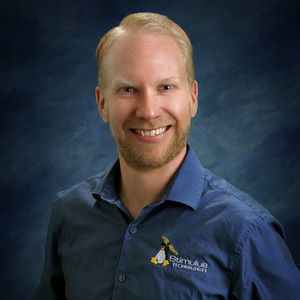
Nathan Whittacre is the Founder and CEO of Stimulus Technologies, a managed IT services provider delivering IT support, cybersecurity, business internet, and VoIP solutions. Founded in 1995, Nathan has grown Stimulus from a garage startup into a trusted tech partner serving hundreds of organizations across the US. With over 30 years of technology and entrepreneurial experience, he is also the author of The CEO’s Digital Survival Guide and hosts the Stimulus Tech Talk podcast, sharing his expertise on technology, cybersecurity, and leadership.


Here’s a glimpse of what you’ll learn:
- [02:12] How childhood entrepreneurship shaped Nathan Whittacre’s business trajectory
- [06:26] The surprising way core values drive company culture and marketing
- [13:43] Why entrepreneurs need peer groups to challenge and guide them
- [17:02] The marketing shift that made direct mail stand out again
- [23:13] How podcasting builds long-term trust and authority for tech leaders
- [26:42] Nathan’s take on AI as the next wave of automation and productivity
- [31:04] Practical AI adoption for small businesses without massive budgets
- [38:57] Nathan’s timeless advice on resilience
In this episode…
Running a business today can feel like trying to keep your footing while everything around you keeps accelerating. Between constant change, new technology, and the pressure to keep growing, how do you build resilience and lead with clarity when the future won’t slow down?
For Nathan Whittacre, the key lies in focusing on what it takes to live another day, even when challenges feel overwhelming. He explains that leadership growth often comes from learning to stay calm, lean on mentors, and trust others to help carry the load. The result is a mindset that helps business owners navigate disruption with confidence instead of fear.
In this episode of Response Drivers, Rick Rappe is joined by Nathan Whittacre, Founder and CEO of Stimulus Technologies, to discuss resilience, leadership growth, and navigating technological change. They explore how values shape company culture, why peer groups are essential for CEOs, and how businesses can embrace AI as a productivity tool. Nathan also shares advice on staying grounded through adversity and leading with a long-term vision.
Resources Mentioned in this episode
- Rick Rappe on LinkedIn
- RPM Direct Marketing
- Nathan Whittacre on LinkedIn
- Stimulus Technologies
- The CEO’s Digital Survival Guide: A Practical Handbook to Navigating the Future by Nathan Whittacre
- Stimulus Tech Talk
- Entrepreneurs’ Organization (EO)
- Entrepreneurial Operating System (EOS)
- Traction: Get a Grip on Your Business by Gino Wickman
- Suno
- Microsoft Copilot
Quotable Moments
- “Being a CEO is like a guy riding a lion.”
- “I needed to learn from others, you know, that have been successful — other peers in my area.”
- “Marketing requires consistent efforts and it requires, you know, change to the environment.”
- “If we think about AI as really an assistant on helping us do better work each day.”
- “If you just can, you know, have the resilience to survive another day.”
Action Steps
- Join a CEO peer group for support and growth: Surrounding yourself with experienced leaders helps you navigate challenges and avoid costly mistakes.
- Define clear company values and culture early: Strong values guide hiring, decision-making, and consistency as your organization grows beyond the founder.
- Commit to consistent marketing efforts over quick experiments: Long-term, steady outreach builds trust and generates better traction than occasional campaigns.
- Embrace AI as a productivity assistant, not as a threat: Using automation wisely allows teams to focus on uniquely human strengths and stay competitive.
- Lead with resilience by focusing on living another day: Staying calm and solving today’s problems builds the endurance needed for long-term success.
Sponsor for this episode...
RPM Direct Marketing specializes in direct mail campaigns, offering services from strategic planning and creative development to predictive modeling and data management. Their Rapid Performance Method accelerates testing and optimization, ensuring higher response rates and sales at lower costs. With a proven track record across various industries, RPM delivers efficient, performance-driven direct mail solutions. Visit rpmdm.com to learn more.
Transcript...
Intro: 00:00
Welcome back to the Response Drivers podcast, where we feature top marketing minds and dig in to their inspiring stories. Learn how these leaders think and find big ideas to push your results and sales to the next level. Now let’s get started.
Rick Rappe: 00:19
Hey, I’m Rick Rappe, host of the Response Drivers podcast. Here I dive deep with marketing experts and innovators to learn how they approach targeted marketing and use data driven strategies to acquire and retain customers. We’ll talk about what’s working, what’s changing, and how we can stay ahead and in evolving marketing landscape.
Response Drivers is brought to you by RPM Direct Marketing. RPM helps companies develop hard hitting direct mail creative and utilize advanced testing and targeting methodologies to reach customers and prospects. Our goal is to fully optimize your marketing performance and drive more sales and exceed growth expectations. RPM delivers smarter, more profitable direct mail solutions so you can turn direct male into a predictable, efficient sales channel. Check out rpmdm.com to learn more.
My guest today is Nathan Whittacre. He’s the CEO of Stimulus Technologies and a visionary leader who has spent three decades at the forefront of technological innovation and entrepreneurship. He’s a trusted advisor, mentor, and thought leader in the technology field. And he’s the author of The CEO’s Digital Survival Guide: A Practical Handbook to Navigating the Future. Stimulus Technologies is focused on providing the best technology to businesses, including IT services, internet and voice over IP. Nathan’s passion lies in helping people better their lives through technology, cybersecurity, and intentional culture.
Thanks for joining me today, Nathan.
Nathan Whittacre: 01:50
Hi. Pleasure to be here, Rick.
Rick Rappe: 01:53
Well, let’s jump in because I’m interested in your early days. You started first your first business at the age of 11, and by 17 you had launched what would later become Stimulus Technologies. So tell us a little bit about those early days, and how do you think those experiences set you up for success today?
Nathan Whittacre: 02:12
So my both my parents were business owners and so I learned from them. Ironically, all four of their kids, all four of us have been business owners and so kind of learned, you know, listening to them and the challenges that they had owning their businesses early on. And, and I don’t know why, you know, we decided to do it, you know, learning about all the struggles as, as kids, you know, that my parents had operating businesses, you know, through the 70s and 80s. But, you know, we saw an opportunity. We lived in a bit of a rural area, and I opened up a little candy store in my house when I was 11 years old.
But my brother wanted to teach me something, and the first thing we did is break out some ledger paper and had to track inventory and sales and, you know, keep basically a PNL statement and a balance sheet of my little candy store. Wow. You know, for a 11 year old, we I was selling between 100 and $200 a week worth of candy out of my little closet in my house. Wow, did that for a few years. The funny story is it got shut down by the tax department.
I think a parent complained that wow. And it took him six months to come and knock on our door and say, hey, you can’t sell candy out of your house because you don’t have a business license. And and we can’t give you a business license for a retail store in your house. So you kind of got to shut down.
Rick Rappe: 03:52
Interesting.
Nathan Whittacre: 03:53
You know, as a 12 year old, that was pretty disheartening. But, you know, realized the potential of owning a business and and the fun that it is. Plus, also, you know, the the struggles of it, you know, just having to understand inventory. And I had, you know, some theft every once in a while. You know, kids would, you know, figure out how to steal a candy bar when they would come in.
So but, you know, obviously the itch was still there. When I was 16, I went to work for a small computer shop. Always been interested in technology and computers ever since I was a really young kid and I worked this after hours building computers, fixing computers for a small computer shop, learned a lot, and the owner of it was a professor at the university. And he came in one day and said, you know, I’d like to focus my efforts on my teaching. And he was also a magician here in Las Vegas.
And so he he decided to shut down the computer store. And I went home to my brother and my dad and said, hey, you know, my my store is closing, but I think we could do the same thing and some of the customers might come over to us. And so we met as a family and decided to start the company. And it was a family business. It was my my brother, my dad and I that started the business in my brother’s garage.
And that put both of my brother and I through college. You know, we both went to school in computer science, and it was a great opportunity for us to, you know, work part time in the business and go to school full time and learned a lot about technology and deploying technology and applied what we were learning in school to the work that we were doing. And, you know, it’s grown. It actually split. We split the company into two different businesses.
One software development company that my brother ran and my business is IT and internet services. And both businesses have grown, you know, to a huge success. So it’s you know testament from you know, 30 years ago. You know, what we, what we decided to set out to do has been successful.
Rick Rappe: 06:07
That’s a great success story. Congratulations. Wow. Your team talks frequently about culture and values. So how have your values shaped the way that you built your business?
And how does your values shape your marketing and your messaging at Stimulus?
Nathan Whittacre: 06:26
That’s a really good question. We you know, early on I didn’t understand business and and the need to, you know, really clearly define what our corporate values are. And as we grew, the the business realized that, you know, as, as the business grew beyond me as the owner and operator of the company. We needed to have something clearly distilled down that, you know, when we did hiring, when we did evaluations, when we did service for clients and everything we do, how do we operate the business? And I was introduced to a book called Traction, which is details out the Entrepreneurial Operating System, or EOS.
And about ten years ago, we sat down as a small management team and and decided to clearly define, you know, what our mission and vision of the company was, and also what our values are, and distill those down into five simple phrases, but that were unique to us in a combined manner. And and these weren’t aspirational. That’s one of the things that I really liked about the book is, you know, some some businesses, you know, define their values by aspirations, things that they want to do or define their values by things that every business should have. You know, you see company values be like integrity and honesty and and are they saying that every other business out there, you know, is doesn’t, you know, operate honest business practices? I’m sure there’s some.
But I think most businesses try to, you know, operate with integrity and honesty. So, you know, for me, you know, like I had some input on what was important to me. But we also looked at different employees that were, you know, star team members and said, what’s different about Shane or, you know, Aaron or, you know, whoever it might be, what what makes them unique or different as a team member and really, you know, worked on defining our values around what, you know, the best performers inside our company were and wanted to, you know, encourage other people to emulate those values.
Rick Rappe: 08:37
Wow. In in your 30 year journey, you said that leadership doesn’t come naturally at first. And what was a pivotal, pivotal moment that you realized you needed to shift your leadership style and how you run your company.
Nathan Whittacre: 08:51
So I remember clearly back in 2008, time frame, 2007, 2008, there was a few things that were happening. One of them was obviously the Great Recession. Las Vegas was hit one of the hardest areas for it. We were a big boomtown with construction and and growth through people moving in here, the casinos, you know, we were building a new casino hotel, you know, like every 3 or 4 months. And then it all stopped and home values went down, construction stopped.
We had a lot of companies that were construction contractors. And so as a business, we were hit really hard. But on the other side of it, we we were growing quite a bit. And it was, you know, we had a few employees, about ten of us. And I realized that, you know, I didn’t learn how to run a company in computer science school, you know?
No, I did not have one class through my bachelor’s or master’s programs about how to, you know, manage people, do human resources, you know, manage finances.
Rick Rappe: 10:01
And.
Nathan Whittacre: 10:02
Needed to get some expertise and understanding of how to be a leader, not just an operator of a business. You know, I had good technical background. I knew how to do the technical work. I just had no idea how to lead people. And I got an invitation to join a CEO peer mastermind group, and I went to this meeting.
It was an introductory meeting and and realized that I needed to learn from others, you know, that have been successful other peers in my area, plus professional speakers that would come in and talk about different topics. And I joined this group and it’s I’ve been involved with the CEO mastermind Group since 2008. With this, I have the same CEO coach for almost 20 years now. And, you know, very many of those same original peers from, you know, 18 years ago, I, I still meet with once a month and have a great relationship with and have learned so much about how to, you know, effectively operate a business and grow a business. And, you know, we were sub million dollars in revenue at the time.
And, you know, we’re a multiple beyond that and growing very quickly. So, you know the growth has been, you know, great trajectory, you know sustained growth over the years. But having that you know, the CEO coach, somebody I can go to that also challenges me. And in my business practices and the things that I’m doing as a leader, but also, you know, peers that I can take problems to, and we can work together as a, you know, a larger leadership team and other, you know, perspectives outside my industry that really help. And I’ve actually joined other peer groups.
I belong to an industry specific peer group. And we were meeting this this week to, you know, help each other. We’re meeting in person. And and that really helps, you know, having mentors and peers and coaches has really changed my ability to, you know, grow beyond myself and you know, let and and also, you know the leaders inside my organization have done some of the similar things and have grown their capabilities as as we’ve grown as an organization. So, you know, it’s it’s the the company is beyond me as a founder, you know, it’s grown beyond, you know, what I do day to day.
I’m not involved with everything day to day. I can do a lot of different things. And that that was a mental shift for me, but also trusting people and and having that ability to, you know, lead the team and the organization. I’ve had to learn a lot. And as we’ve grown.
Rick Rappe: 12:50
Yeah. Growth will force you to learn, there’s no doubt about that. I’m a member of EO. I think I mentioned that to you earlier and Entrepreneurs’ Organization. And it’s been wonderfully helpful for me as well.
Sounds very similar to what you’re describing in some ways, peer group of other entrepreneurs. And I’ve been a member of EO for about, I think, 13 or 14 years now, and it’s been so helpful for me as an entrepreneur. When I started this company and I was basically a subject matter expert, I knew an enormous amount about direct marketing. I knew how to do direct marketing, but I had very little idea how to run a company or how to grow an agency. So EO has been hugely helpful for me in that regard as well.
Nathan Whittacre: 13:43
Certainly when when I talk to people that want to start businesses or, you know, struggling, growing the business, that’s one of primary recommendations is, you know, get involved with a peer group, you know, learn from others, you know, beyond the social side of it. You know, really people that are willing to challenge you and provide good advice because they’ve been there before. Yeah. You know, it’s that’s that’s one of the struggles I think a lot of entrepreneurs have is, you know, often they’re running a company which is the largest, you know, organisation they’ve ever ran. And, you know, especially a founder led company.
So, you know, learning from people that have been there and done that before is a huge benefit because they can, you know, let you know where those landmines are and how to best navigate them. Yeah. You know, as you move along.
Rick Rappe: 14:32
Yeah. EO has been more than just a business group for for a lot of us. I mean, entrepreneurship is very can be very lonely at times. You don’t really have people that you can open up to and talk, you know, fully, openly with and even sometimes your own family doesn’t really understand what you’re going through, right. And so that EO connection with other entrepreneurs is very special and very useful.
And yeah, it’s turned into more of a life group really, where, you know, you you go through all kinds of different life changes with people. Their kids grow up and they’re and go off to college and, and they go through all kinds of ups and downs, you know, just like we all do. So it’s kind of nice to have that group that we, that you can consult with about those business things, but also about these, all these other life things that happen along the way.
Nathan Whittacre: 15:27
Sure. I there’s a there’s a story that I read once that I, I relate to a lot. You mentioned the you know that being a CEO can be very lonely and and, you know, the story goes, you know, being a CEO is like a guy riding a lion. And everybody looks out on the guy riding the lion and say, wow, that guy has so much courage. He’s so driven.
You know what amazing things that he’s doing there. You know, that’s a great thing. And the guy riding the lion says, what the hell am I doing? I. How do I get off of this thing?
And how do I not die?
Rick Rappe: 16:03
Yeah, exactly. Oh, yeah.
Nathan Whittacre: 16:06
Being a founder CEO, you know, of a growing, you know, SMB or lower middle market business, it feels a lot of times like riding a lion where the, you know, your organization is, you know, constantly trying to kill you in one way or another, you know, whether it’s competitors or HR issues or financial issues. Yeah. Going through Covid financial crisis, there’s always something out there trying to kill you, and you know, nobody understands it. You know, other than the other guy across the way that’s also riding the lion.
Rick Rappe: 16:40
You mentioned in some of the messages that I read about that marketing wasn’t initially intuitive for you early on, and that I’m sure you’ve grown into a much more sophisticated approach to marketing. But tell me a little bit about what’s worked for you and what what hasn’t worked. What have you tried that hasn’t worked for you?
Nathan Whittacre: 17:02
So, you know, when we started out, most of our clients came by word of mouth, friends and family. You know, it happens with a lot of businesses. But you, you know, kind of limit yourself on the the size of your business based off of the people that you know. And if you know a lot of people that have businesses, then that’s great. But you’re still kind of limited.
And so, you know, we we did different things early on. You know, I just I remember doing like the five around, you know, you’d go to a client’s office and then you’d go hand out flyers to five businesses around them, somewhat successful. But you know, it’s as a. You know, I’m I’m quite an introvert. I’m a tech guy, you know, by nature.
And to walk into somebody’s business and just talk to the front desk person or whatever is very uncomfortable. Did things like door hangers at some point. And, you know, we we just weren’t getting a lot of traction with that marketing. And so about ten, 12 years ago, we were growing, you know, a good ten, 20% per year. And I was happy with that.
But I wanted to grow faster and, and, you know, span the market. And there was a, a tech company based here in Las Vegas that I was getting some of their marketing they were marketing out to us, and I, I noticed that their marketing was very different and creative. I’d get this letter in the mail with, you know, a dollar bill attached to it and, you know, something like an offer, you know, you can’t refuse. And, and, you know, just kind of weird mailings and which was interesting. I mean, I would never be their customer because we do the same thing they do.
But I realized that they were doing this, you know, very interesting direct response marketing that was creative that I had never seen before. And there was a group called the Technology Marketing Toolkit that was helping this organization put put these materials together. It was, you know, specific to our managed services industry. After a few years of seeing their rapid growth, I decided that we needed to do something different than what we had been doing, and we decided to also join that group and use some of their marketing tools. And and it’s interesting, you know, that I’ve learned over the last eight years is being, you know, part of that organization that, you know, marketing requires consistent efforts and it requires, you know, change to the environment.
But, you know, it’s just more about consistency than, you know, trying a new campaign every once in a while. You know, we were before the call, we were talking about direct response. And I want to just do SEO and AdWords and, you know, social media. But I think today, you know, the different thing to do is, you know, sending those funny envelopes or, you know, sending a Fedex package or, you know, something different to communicate with the medium that they’re not used to being marketed to, which, you know, 30 years ago, you know, direct mail marketing was, you know, about the only way other than, you know, billboards or TV and radio ads. But, you know, everybody wants to market on internet Doing, you know, the the letters and email campaigns is, is actually the different thing to do now.
And we’re finding, you know, a lot of success. But it does take a lot of effort, you know, consistently mailing things, following up on them and being creative to get people to open up the mail. And that’s, you know, and we’ve had good luck, you know, doing that. You know, obviously we have our other nurture campaigns and digital campaigns that we do, but we find that the direct mail is is very effective.
Rick Rappe: 20:54
That’s great. That’s good for us to hear since that’s what we’re focused on. We obviously feel like direct mail is a great way to break through the digital clutter that people are, you know, faced with today. There’s we get we all get so many emails and so much constant bombardment of ads when we’re online and everything, but the mail comes through and reaches into your home, you know, and and people have actually the tangible nature of direct mail makes it much more. Memorable and and has has a different way, way it interacts with you.
And your brain actually lights up a whole different area of your brain than digital marketing. Believe it or not, we have a framework for direct marketing and direct mail performance, and I’m happy to share that with you and send that over to you. I’m happy to share it with anybody else that reaches out and asks for it as well. But. The the bottom level, the foundational level of our framework is to have a test and measure and optimize approach.
And I think that’s one of the things that’s so interesting that you can do with direct mail is you can you can mail more than one thing at a time and read the results and then make data driven decisions. And so much of marketing these days is guesswork, right? You feel, let’s guess, at what’s going to work next. And let’s try it and do one thing at a time, which is can be very slow and that that slow speed can be dangerous, right? It can cause people to.
What we see sometimes is people try a certain thing, it doesn’t work. And then they say, oh, well, all direct mail doesn’t work. Well, that’s not true. You just didn’t go about it in the right way. There’s a there’s a sort of scientific approach that can work in direct mail.
So we we’re big proponents that that that foundational level is the testing methodology and the response analysis. And then using that with in a cycle to fuel your and make educated decisions about what to roll out with and what to where to put your money next. You host a podcast called Stimulus Tech Talk, and I wanted to ask you about your experience podcasting, or how has that contributed to building trust and generating inbound interest?
Nathan Whittacre: 23:13
We’ve we’re approaching 100 episodes on Stimulus Tech Talk. Wow. About two and a half years now of recording. It’s been an interesting process. You know, we didn’t know what to expect or what we would do with the podcast.
It’s been a variety of, you know, different things that we’ve done. One of one of it is bringing guests on. And like, what you’re doing to me right now is, you know, different people in the industry or outside the industry that bring expertise in and, and, you know, some of the episodes I, I’m the, you know, the expert being interviewed by my marketing manager. What we what really it’s about is about creating an authority for me as a business owner, you know, there’s different types of marketing that you do. You know, the direct response marketing is a definitely a good marketing avenue.
But another one is, you know, building up the organization up as the authority Of the, you know, in your specific niche. And that’s the point of Stimulus. TikTok is, you know, building myself up as an authority. And it’s a great way to generate content. You know, we we take the podcast, we transcribe it and, you know, it becomes, you know, content on our website.
And, and especially when we’re doing like guesting, we we, you know, cross share the podcast with our guests or if I’m guesting on another podcast and that, you know, brings people into our site, you know, getting those cross links. But it’s been also on the other side of it. I have to have a specific message that I’m sharing. You know, whether you’re asking me about business questions or, you know, history of the company, but, you know, my specific view on different topics, you know, whether it’s technology or just business leadership, things like that. You know, as an owner, I, you know, create an authority around myself of the business.
And so podcast is a great way to do that. Guesting on other people’s podcasts is a great way to do that. And it really, you know, gives you that authority status of, you know, this guy really knows what they’re talking about. You know, I get a lot of people that and some of them are vendors that call me up that just do, you know, want to sell to me. But, you know, we get clients that call up, oh, I heard you on this random podcast or, you know, I listen to a few of your podcasts, you seem to know what you’re doing and, you know, got a lot of interest.
So it’s been really helpful in building the authority of me as the CEO, but also the company in general of what we believe in, what our platform is, how we do business. And if people want to know about, you know us more, you know, they can watch a YouTube video from the podcast or listen to the podcast in their car, and it really helps them understand what we are about as a company.
Rick Rappe: 26:14
I want to ask you some more questions about technology adoption and how fast technology is changing. And of course, we have to get into some questions about artificial intelligence. These, you know, where is this all headed? You’ve seen everything from dial up to cloud to AI. What’s the what’s the trend that you see that you see really moving us forward and reshaping our business models?
Nathan Whittacre: 26:42
Yeah. You know, 30 years in technology, it has dramatically changed. You know, when we first started, we were helping businesses just get on the internet, get their website set up, use email effectively. You know, that was the first, you know, push and then, you know, moved to the cloud, you know, ten years ago was the big push software as a service, things like that. And, you know, I think about AI in terms of, you know, a new iteration of automation and improvement of productivity inside an organization because, you know, in the end, what all organizations are trying to do is do more good work with less people and less less man hours, not less people hours.
And and you and you have to do it to stay competitive in the environment because especially for small to mid-sized businesses, we’re you know, we’re fighting against large enterprises with huge budgets. And they could just throw money at things. And we have to figure out how to outsmart and outwork them. And the best way to do it is, you know, how can we best automate our mundane efforts in the company and really focus on what makes us unique and experts? And that’s, I think, where we need to be focused as we move to a new iteration of automation and improvement of productivity is what makes our businesses unique.
And what things can we automate that don’t aren’t really additive to our uniqueness as a company. And so if if we think about AI as really an assistant on helping us do better work each day, that will make us more productive, it’ll, you know, allow our team members to focus on what they really want to do, what they were hired to do, and do less of the things that they don’t, you know, don’t necessarily want to do. And I also a little bit of a futurist, and I think about why we need this as a country and as a world. And, you know, birth rates are down. We’re in the United States.
We’re not, you know, increasing our population by natural methods. You know, there’s and, you know, obviously in the political environment that we’re in, Immigration is down. And so we as business leaders have to do more work with less people because there are literally less people to do the work. And, you know, we have to think about that as a world, too, of how do we, you know, continue, you know, producing increased, you know, domestic products or increased productivity with less people. And, you know, that’s that’s where automation comes in.
If you listen to, you know, like Elon Musk, I think that’s a big push for Tesla and his organization. There is you know, really it’s that same idea is we we have to be able to, you know, do focus our efforts on things that are uniquely human and let automation do things that are, you know, can be automated with technology and with computers. And we’ve been doing it, you know, people that are scared of it. You know, we’re probably scared of the computer back in 1950, you know, that Was going to eliminate jobs. And, you know, jobs have been eliminated by technology for, you know, hundreds of years.
And it’s just accelerating it. And I think that’s what scares people more than anything else is that acceleration of the change, which really is, you know, happening. So but you know, those those organizations and individuals that embrace it are on the forefront and really see the the benefits in their organizations and their lives through, you know, reducing those tasks that we don’t necessarily want to do and, and focusing on the work that we really enjoy doing and why we went into the fields that we went into.
Rick Rappe: 30:46
Yeah. Well, will you be shifting Stimulus Tech to help clients adopt AI and use AI in their businesses, or is that a part of your focus and moving forward?
Nathan Whittacre: 31:04
We do. We? We have a small division that we’ve started as AI, as a service. We offer some AI services, just, you know, kind of experimenting, helping clients understand how to implement it inside and prepare for it. So it is something that we’re incorporating and then seeing where we where we expand it to.
So most of our clients are in the SMB market, you know, some 20 employees. And so these companies aren’t going to go out and make a, you know, $100 million investment in a new AI tool. You know, they’re looking at, you know, how can I use Microsoft Copilot better? Or, you know, my line of business application at my dentist practice incorporated some AI. How do I use that to efficiently, you know, look at dental records, you know, these are questions.
And, you know, we’re helping businesses navigate that changing landscape because business owners are hearing AI, AI, AI cannot implement AI. And then the question is where? How am I going to get benefit inside my organization out of AI? And we’re trying to answer that in a very measured approach. As we’re helping clients implement these tools inside their businesses.
Rick Rappe: 32:20
Yeah, it’s especially helpful for small businesses because the CEOs, usually the one who’s, you know, leading the technology within the business, and it’s an area that they don’t know very much about. So they definitely need to find those outside resources to help them along the way. I know I do. I need to find the people that are expert at automation and help us to automate our internal processes and things like that. There’s there’s more and more ways to use AI popping up.
It seems like almost every day. And, you know, you just kind of stumble upon them and then you’re like, wow, that’s amazing. But it’s hard to digest it all. You know.
Nathan Whittacre: 33:03
It is. You know, and there’s a ton of tools out there and trying to figure out what, what’s useful and what’s not. And then some things are just fun to play around with. Like, yeah, you know, I experiment around with different things. You know, personally, I ran across an app called Suno late last year to do songwriting and music.
I’m not a, you know, not a songwriter or, you know, professional musician. I, I play the piano and a little bit, you know, at this, this tool is amazing. You know, you put in some ideas and, you know, write some lyrics and it, you know, give it a genre and it generates a, an amazing song. You know, based off of just a few prompts. And it’s, it’s really cool.
It’s it’s amazing. And supposedly musicians are using a tool like that to, to, you know, supplement the work that they’re doing. So you know, that’s that’s the thing is, you know, again, focus on what you’re an expert in and let AI help automate the things that you’re not great at. And that really what you know what we’re seeing.
Rick Rappe: 34:12
Yeah. Well it’s an exciting time that’s for sure. It’s not it’s not a time to get bored. We have to keep learning all the time. It’s very demanding in that regard, isn’t it?
You wrote a book actually called The CEO’s Digital Survival Guide. Why did you feel like CEOs needed a survival guide? I guess we’ve kind of already talked about that. But what’s a common blind spot or something that you address in the book?
Nathan Whittacre: 34:42
The the reason why I wrote the book, part of it was that authority marketing that we talked about, it was, you know, I, I, I like doing new things. And I was coming up on my 40th birthday a few years ago and I wanted to go on an epic adventure. And I learned about this trail called the John Muir Trail out here in the the 220 mile through hike that that a lot of people do. It’s a very competitive hike through the Sierra Nevada mountains. And I, I was I learned about it on a scouting trip that I was a leader on and and I went I decided I wanted to do it, but I’ve never done a a through hike, backpacking adventure, and through the process of learning how to buy gear and how to navigate the permitting process and how to, you know, get resupplies and stay safe on the trail and all these things.
I relied on a lot of experts and a lot of guides. And I really, you know, a lot of the questions that I had were, you know, similar to questions that we would get as an organization about how to use technology and they were often the same questions. And, you know, the CEOs or leaders would come to ask us about and decided to write, you know, similar to what I purchased to get, you know, an understanding of thru hiking, decided to write a guide to help business owners understand the basics of what they need to do to implement technology well inside their organizations. So the the guide is, you know, a check up on whether that is an organization from a technology perspective and gives them enough information to effectively have good conversations with the experts in the industry. And a lot of CEOs don’t like talking to it.
Guys. You know, we we use a lot of acronyms. We, you know, sometimes can not on purpose, but talk over people’s heads and get those acronyms or explanations. And so I wanted to give a basis on, you know, why why these technologies are important. And then what threats are out there to their organization that they need to protect against?
Because a lot of, you know, business owners don’t want to invest in cyber security because they think they’re too small to really have, you know, a hacker come after them. But all organizations are susceptible, whether you’re a one, one person, you know, organization or, you know, have hundreds of millions of employees or, you know, whatever millions of employees, you know, they’re all people to cyber attacks. And so I wanted to give, you know, a basis on, okay, what are the core technologies you need? What are the core defenses you need? And then how to have those conversations with the experts to get it implemented effectively in the organization?
Rick Rappe: 37:37
Well, that sounds incredibly useful. You said did you say that you were able to offer that to people if they were interested?
Nathan Whittacre: 37:44
Yeah. So I I’m on LinkedIn. If you do a quick search for for me on LinkedIn and connect with me and just send me a quick direct message. I’d be happy to send you a copy of The CEO’s Digital Survival Guide. It’s also available on, you know, all the other bookstores Amazon, Barnes and Noble, but, you know, happy to send you a free copy.
Because, you know, it’s I’m evangelizing our industry and the things that are important. So happy to connect and send you a copy.
Rick Rappe: 38:14
Well, the power of the word free is very strong. So you know, when you say free, then you’re going to get some responses. That’s how direct marketing works. And you know, you’re I know I’m going to send you a message for the guide, probably right after we get off this recording, you know.
Nathan Whittacre: 38:32
Excellent.
Rick Rappe: 38:33
Well, this has been great. I really appreciate your time. And I guess I want to ask you maybe one more question and and just to wrap up, but tell us about something that has been really impactful for you in your business. What’s something that you’ve learned a great deal from or something that you think you’d like to share with other business owners and other people out there.
Nathan Whittacre: 38:57
You know, I was sitting down with my CEO coach quite a few years ago when we first started, and I was, you know, as I mentioned, a changing time in my organization. And he said something to me that was probably a phrase that’s been most impactful on the business and that’s live another day. You know, because I think we’re faced with so many challenges as business owners that seem unsurmountable, there’s, you know, no clear path forward. And, and on those days that, you know, the the vision is lost, you have no idea how you’re going to get through whatever challenge you’re dealing with, what the focus needs to be on. Okay.
What can I do today to help the business survive to tomorrow? And then tomorrow comes and you figure out how to survive another day. And so I think, you know, having all of us as CEOs. Business owners have a long term vision. You know, we see where we want to go.
You know, a year, five years, ten years from now. But sometimes it’s really hard to see how to get to tomorrow and how resilience to overcome the challenges of the day. Realize that, you know, if if we can get through the challenges of today, we can certainly get through the challenges of tomorrow, and that will lead us to success in that year and five years and ten years. And, you know, there’s no business owner out there that hasn’t had a challenge that seemed like, you know, tomorrow. You know, I’m not I’m not going to be able to overcome this.
And there’s certainly challenges out there that are like that, you know, that maybe not be survivable. But I think for 90 plus percent of them out there, if you just can, you know, have the resilience to survive another day and to focus on, you know, the the challenges of today and how to overcome them. You know, the future will take care of itself if you’re willing to put in the hard efforts today to overcome them. So that’s probably my biggest piece of advice that I learned that has allowed me to continue on in the face of all the adversity that you know, that I, as a business owner, suffer from. And and it’s brought me a little, a lot of peace to, you know, realizing that, you know, the stress of the day isn’t, isn’t worth it.
I think in the brief conversation at the beginning, you were saying, I’m so calm and and that’s that’s what’s helped me overcome it is, you know, yeah, there’s nervousness, pressure. But you got to stay calm under that and just survive the next, the next day.
Rick Rappe: 41:23
Yeah, that resonates with me for sure. I appreciate that advice a lot. I think I’ve had to get okay. I like to have checklists and check things off and constantly be getting things done. One of the things that’s been a learning process for me is the ability to like, you know, write down some really hard problems and just sit with them for a while and not and not know when I’m going to have an answer to that question.
But I don’t forget about it. I just leave it in front of me, leave it on my whiteboard, put it on a list or whatever, and I just sit with it for a while and eventually answers come. It’s amazing, but it doesn’t always happen on my schedule. It seems to happen on some other schedule. I don’t know who who who makes the schedule, but yeah, you just have to hang in there sometimes until you’re like, oh, well, it’s going to take some time to figure this out.
And I get frustrated in not having the immediate answers, you know what I mean?
Nathan Whittacre: 42:24
So yeah, I think it’s you know, as business owners, most of us are type A personalities are very driven. Obviously, we would have started a business without being driven. And we, you know, we want to control and we want to, you know, be able to to dictate how the outcomes are. And just like I said, some outcomes take a lot longer than than our expectations. And so just focus on what you can change today and what you can work on today.
And then yeah, but when the opportunity comes to solve those bigger problems, you know, you’ll you’ll be there ready to do it.
Rick Rappe: 43:01
Yeah. Well that’s great advice. Thank you so much, Nathan. Well, this has been a real pleasure getting to know you and to hear your advice and your wisdom. So thank you so much for being a guest on Response Drivers.
Nathan Whittacre: 43:13
It’s my pleasure. Thanks for having me.
Outro: 43:16
That’s a wrap for this episode of Response Drivers. Thanks for tuning in. If you found today’s insights valuable, make sure to subscribe so you never miss an episode. And if you’re enjoying the show, we’d love it if you left a review. Got a question or a topic you’d like us to cover?
Just drop us a message at responsedrivers@rpmdm.com.. Until next time, keep driving response and making your marketing work smarter.